

APatch
APatch screenshots (12)

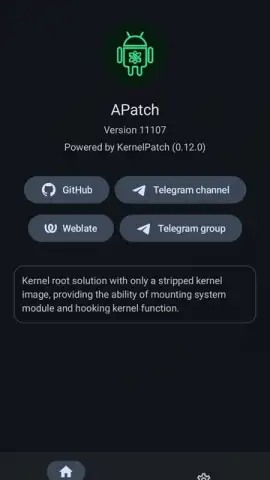
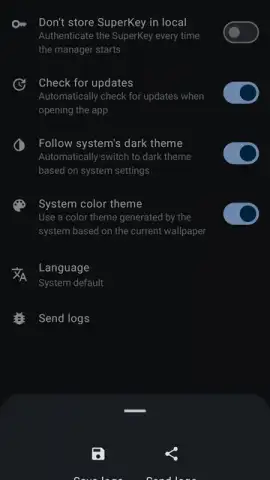
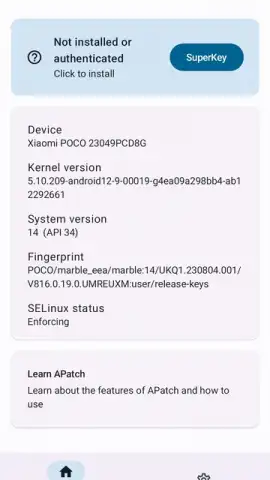
Description APatch
A Technical Overview of APatch for Advanced Android Modification
The pursuit of deeper system control on Android devices often leads power users beyond standard applications and into the realm of kernel-level modification. APatch represents a specialized tool designed for this exact purpose, functioning as an advanced kernel patching utility to achieve superuser privileges. Unlike simpler one-click rooting solutions, APatch operates by directly modifying the Linux kernel on compatible ARM64 devices, providing a method of system access that is distinct from and often more concealed than traditional root. This approach is engineered for users who require granular control over their device's core functions, paralleling the modular flexibility of systems like Magisk but operating through a different, kernel-integrated framework.
Core Architecture and Patching Mechanism
APatch utilizes a dedicated engine known as KernelPatch to facilitate its modifications. This engine allows for the real-time patching of kernel code paths, the installation of modules, and the application of runtime hooks. The system is built around two primary module types: APM (APatch Modules), which handle user-space modifications similar in concept to Magisk modules, and KPM (Kernel Patch Modules), which are responsible for direct code injection and modification within the kernel space itself. This kernel-space operation is a defining characteristic, as it can offer improved obfuscation against common root-detection methods employed by various applications and services. Successful implementation requires a device with an unlocked bootloader and a precise match between the device's firmware version and the extracted boot.img file that is patched. The patched image is then flashed via custom recovery or a PC-based tool, establishing the new kernel environment.
Functional Scope and System Management
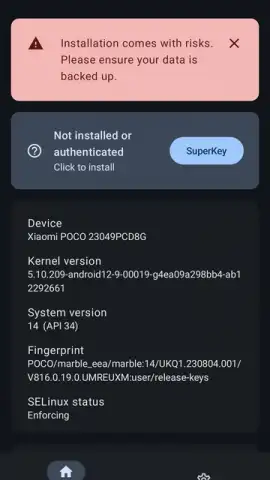
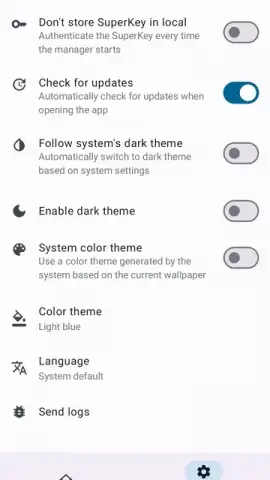
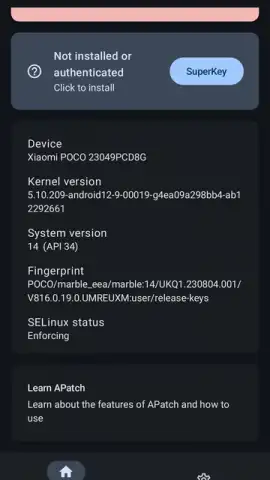
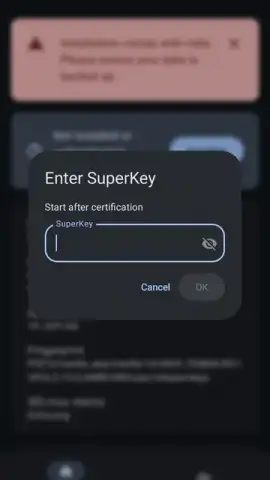
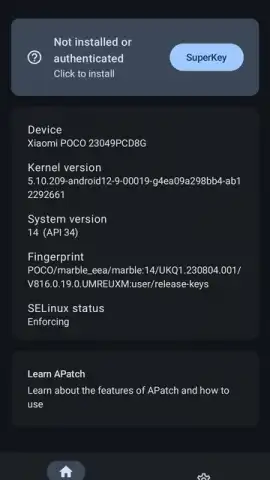
Upon successful installation, management is conducted through a control panel interface. This panel, which shares a structural basis with KernelSU but is adapted for APatch's specific needs, provides centralized oversight of superuser privileges. Users can grant or deny root access on a per-application basis, apply or revert system patches, and manage the installed modules. The module ecosystem, accessible via APM, enables significant functional expansion, allowing users to alter Android's behavior and add features through community-developed extensions. A critical security component is the SuperKey system, which governs privileges beyond standard root. The application enforces the use of a strong passkey, between 8 and 63 characters, to mitigate the risk of unauthorized access stemming from a compromised key.
Technical Prerequisites and Operational Limits
Compatibility is a paramount consideration. APatch is designed for ARM64 devices running Linux kernel versions from 3.18 to 6.1. For the patching process to function, the kernel must be compiled with CONFIG_KALLSYMS enabled; having CONFIG_KALLSYMS_ALL active is also highly recommended. It is explicitly incompatible with certain Samsung devices that implement enhanced security protocols (e.g., Knox). The procedure demands technical precision, as using an incorrect or mismatched boot.img file will result in a non-functional device state, potentially requiring a full firmware restore. The tool contains no advertising and positions itself as a utility for experienced enthusiasts who understand the associated risks and requirements.
- Kernel-Level Patching Engine: Modifies the Linux kernel directly on compatible ARM64 devices using the KernelPatch engine for real-time code hooks.
- Dual-Module System (APM & KPM): Supports user-space APatch Modules for feature expansion and Kernel Patch Modules for direct kernel code injection.
- Enhanced Root Concealment: Kernel-space operation provides a foundation for better hiding from common root-detection mechanisms compared to user-space methods.
- Granular Permission Management: Features a control panel for managing superuser access per application and for overseeing all applied system modifications.
- SuperKey Security System: Implements a mandatory strong passkey (8-63 chars) to secure privileges that extend beyond conventional root access.
Get your bonus of unparalleled system control and start modifying your Android device at the kernel level today.
Heads up: you'll need wifi for downloading firmware images and modules. The patching process requires technical knowledge and a compatible device; an incorrect procedure can render your device inoperable. Some advanced modules are developed by the community and are extra.


